
golf simulator
Golf Simulator Projector Screen Size Chart: The Only Numbers You Need Before You Build
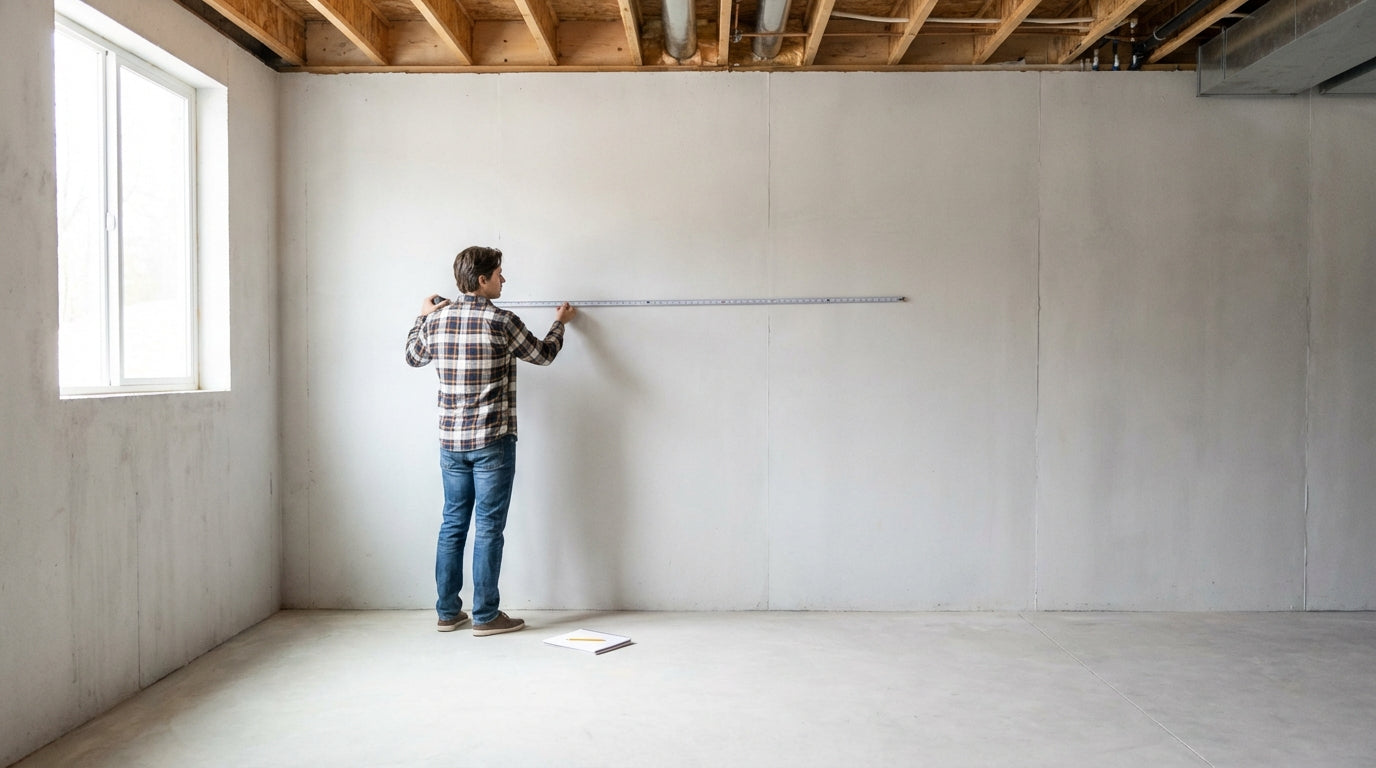
Screen size is the first decision in a simulator build, not the last one. It locks in your projector choice, your room layout, your swing clearance and your ceiling height — every other spec has to bend around it. Which is exactly why it goes wrong so often: launch monitors and software get weeks of research, and screen size gets picked in an afternoon. Get it wrong and you're tearing the build down and starting over.
The short answer — size your screen to your room depth:
14 ft deep10 ft wide × 8 ft high
16 ft deep — most common build10 ft wide × 9 ft high
18 ft deep12 ft wide × 9 ft high
20 ft+ deep12–14 ft wide × 9–10 ft high
↓ See the full chart with throw-ratio notes & the 12 ft minimum
Building one now? BenQ TH671ST short-throw projector — from $949.
That's the starting reference. The rest of this post shows you how to read it for your specific room — because the same room depth can support a different screen depending on your ceiling and projector.
Why Screen Size Isn't Just a Number You Pick
Here's what trips people up: you don't pick your screen size based on what looks good on a spec sheet. You pick it based on what your room physically allows. Three variables lock together to determine your usable screen dimensions, and changing any one of them changes the result.
Ready to shop impact screens?
Browse the full Carl's Place lineup — every screen ships ready to mount with real size specs.
Shop Carl's Place Impact Screens →- Room depth — total distance from impact screen face to the back wall
- Ceiling height — sets the hard cap on usable screen height
- Projector throw ratio — determines how far back the projector must sit to fill the screen width you want
A blanket "get a 10-foot screen" recommendation works in some rooms and fails completely in others. The chart below tells you which situation you're actually in.
Free tool — 30 seconds
Where should your projector go?
Pick your projector and screen size — get the exact mounting distance, image size, and brightness for your build. No math required.
Open the projector calculator →The Three Variables, Actually Explained
Room Depth: Where You Lose Distance Fast
Room depth sounds simple — it's just the length of the room. But you lose usable depth quickly once you account for clearances.
The recommended hitting distance from screen is 10–12 feet. You also need at least 12–16 inches of clearance between the back of the impact screen and the wall behind it — without it, the screen can't rebound properly and frame stress increases significantly. (Source: Yardstick Golf – Golf Simulator Room Size; Virtual Tee Golf – Room Dimensions Guide; BenQ Golf Simulator Resources)
That's 11–13.5 feet consumed before your projector is placed anywhere. In a 14-foot room you might have 2–3 feet of throw budget. In a 20-foot room you have 7–8 feet. Those two scenarios require completely different projector types.
Ceiling Height: Your Screen Height Cap
Ceiling height directly caps how tall your screen can be — and by extension, how much of the image you actually see. A minimum of 9 feet is required for most golfers to swing comfortably, with 10 feet or more recommended for a full driver swing. Golfers over 6 feet tall need at least 10 feet of clearance, and anyone over 6'5" should be targeting 11 feet. (Source: Rapsodo Golf Blog; Indoor Golf Design; Garage Golf)
After mounting hardware and top clearance, a 9-foot ceiling gives you a practical screen height of about 7.5–8 feet. A 10-foot ceiling opens up a true 9-foot screen. That difference matters more than most people realize — particularly when you're trying to see a full ball flight arc on screen.
Projector Throw Ratio: The Multiplier That Changes Everything
Throw ratio is the number that converts available projector-to-screen distance into maximum usable screen width. A throw ratio of 0.8:1 means you need 0.8 feet of throw distance per foot of screen width. A 1.5:1 ratio needs 50% more room to fill the same screen.
Short throw projectors (0.4:1 to 1.0:1) are the most common choice for home golf simulators. Ultra-short throw (UST) units have ratios below 0.4:1 and can sit just 0–4 feet from the screen — a game changer for shallow rooms. (Source: Top Shelf Golf – Short Throw vs Ultra-Short Throw Projector Placement Guide; Virtual Tee Golf Blog)
If you want to run the exact math for your projector model, the Golf Simulator Projector Throw Distance Calculator has the full formula and worked examples.
Projector Distance to Fill a 10-Foot Screen by Throw Ratio
The chart below shows how far back each projector class needs to sit to fill a 10-foot-wide screen. This is the core trade-off every builder faces: a bigger image from further back requires more room — unless you switch to a shorter throw ratio.
Projector Distance Required to Fill a 10-Foot-Wide Screen by Throw Ratio
Source: Top Shelf Golf Projector Setup Guide; Virtual Tee Golf Blog; BenQ Measure Screen Size Guide
If your room leaves only 6 feet of projector throw after clearances, a standard 1.5:1 projector won't fill a 10-foot screen — it would need 15 feet of throw distance. You'd either need to drop screen width or switch to a short throw or UST unit.
Golf Simulator Screen Size Chart by Room Depth
Use the table below as your starting reference. Find your total room depth in the left column, then read across for the screen width and height that actually fits — after accounting for hitting distance, screen clearance, and projector throw budget.
Golf Simulator Screen Size Chart: Room Depth → Recommended Screen Dimensions
Swipe to compare →
| Total Room Depth | Screen Width | Screen Height | Notes |
|---|---|---|---|
| 12 ft | 8 ft | 8 ft | Absolute minimum; limits swing; UST projector required |
| 14 ft | 10 ft | 8 ft | Entry comfortable range; short throw (0.8:1) fits at ~7 ft throw distance |
| 16 ft | 10 ft | 9 ft | Most popular home build size; short throw at ~8–9 ft throw distance |
| 18 ft | 12 ft | 9 ft | Comfortable room; 4:3 screen fits; standard short throw at ~9.6 ft viable |
| 20 ft+ | 12–14 ft | 9–10 ft | Ideal; fits both left- and right-handed golfers; standard throw projectors viable |
One thing worth noting: jumping from 14 to 16 feet of room depth doesn't widen your recommended screen — but it does unlock a 9-foot screen height and gives your projector more comfortable throw distance. Width and height don't scale together. Solve them separately.
Got your height and width?
Every Carl’s Place screen is listed by its exact finished dimensions, so you can match the number you just worked out instead of guessing at a size label.
Shop screens by exact size →By the Numbers: What the Data Says
- The golf simulator market was valued at $1.74 billion in 2024 and is growing at a CAGR of 9.1% through 2033. More home builders are entering the market every quarter — and most are working without a sizing reference. (Source: Straits Research – Golf Simulators Market Report)
- Over 15 million Americans engage in off-course golf activities — including indoor simulator facilities — each year. That's a massive pool of potential home builders, most of whom are sizing screens by guesswork. (Source: National Golf Foundation, cited by Straits Research and GM Insights)
- A minimum 9-foot ceiling is required for most golfers, with 10 feet or more recommended for a full driver swing. Golfers over 6'5" need 11 feet. That ceiling cap directly limits your practical screen height after mounting clearance. (Source: Rapsodo Golf Blog; Indoor Golf Design; Garage Golf)
- Short throw projectors (0.4:1 to 1.0:1) are the most common choice for home golf simulators. UST projectors (below 0.4:1) sit just 0–4 feet from the screen and are the standard solution for rooms under 14 feet deep. (Source: Top Shelf Golf – Short Throw vs Ultra-Short Throw Projector Placement Guide; Virtual Tee Golf Blog)
The Sizing Mistakes That Cost Builders the Most
Going wider than throw distance can support
A 12-foot screen looks great in a product listing. But if your room leaves 6 feet of projector throw budget, a 0.8:1 short throw projector fills just 7.5 feet of image width at that distance — leaving wasted screen on the sides or a mismatched image that bleeds off the edges. Check throw math before ordering a screen, not after.
Forgetting aspect ratio and screen shape
Screen width and height aren't just two independent dimensions. Most impact screens come in 16:9 or 4:3 aspect ratios, and the ratio affects how your simulator software renders the image. If your room depth pushes you to a 10×9-foot screen but your projector outputs 16:9, you'll have gaps or distortion. The Golf Simulator Screen Aspect Ratio Guide covers exactly what happens when these don't align.
Confusing screen size with frame outer dimensions
Your screen size is the printable area — the frame adds several inches per side. If you're working with a tight room width, the frame outer dimension matters just as much as the screen itself. The Golf Simulator Impact Screen Frame Size Guide has the exact outer dimension numbers to check before you build.
How to Apply This to Your Room Right Now
Here's the five-step process — takes about 10 minutes:
- Measure your total room depth from the screen face position to the back wall.
- Subtract 11–13 feet for hitting distance (10–12 ft) plus screen-to-wall clearance (1–1.5 ft).
- What remains is your projector throw budget. Divide your target screen width by that number — that's the minimum throw ratio your projector needs to hit.
- Check your ceiling height and subtract 1–1.5 feet for mounting clearance to get your max usable screen height.
- Cross-reference the chart above to confirm your width and height are achievable with a real projector in that throw class.
Five steps. Every number confirmed before you order anything. That's how you avoid a reinstall.
Find the Right Screen for Your Room
Once you know your room's numbers, the next step is getting a screen that's actually built to handle repeated full-swing impact — not just project a clean image. Browse the full lineup of Carl's Place impact screens, from compact 8-foot builds to full 14-foot bays, at golfingsim.com/collections/impact-screens. Every screen ships ready to mount, with real size specs so the chart above translates directly to what you're ordering.
Got your numbers? Shop golf simulator impact screens and short-throw projectors sized for your build, or start with a complete simulator package.
Related reading: Golf Simulator Ceiling Height Requirements for a Garage Build: The Real Numbers Before You Buy a Frame


Not sure which simulator fits your room?
The two-minute Simulator Finder Quiz checks your space and budget against every system we carry.

Keep Reading
Related guides

golf simulatorGolf Simulator Hitting Mat Sizing Guide: Exact Dimensions for 10x12, 12x15, and 16x18 Rooms

golf simulatorGolf Simulator Enclosure Cost to Build: Every Line Item, DIY vs Pre-Made (2026 Numbers)

golf simulatorGolf Simulator Room Electrical Plan: Where Every Outlet Goes Before the Frame Closes Up