
DIY golf impact screen vs store bought
DIY Golf Impact Screen vs Store Bought: Where Homemade Screens Actually Fail
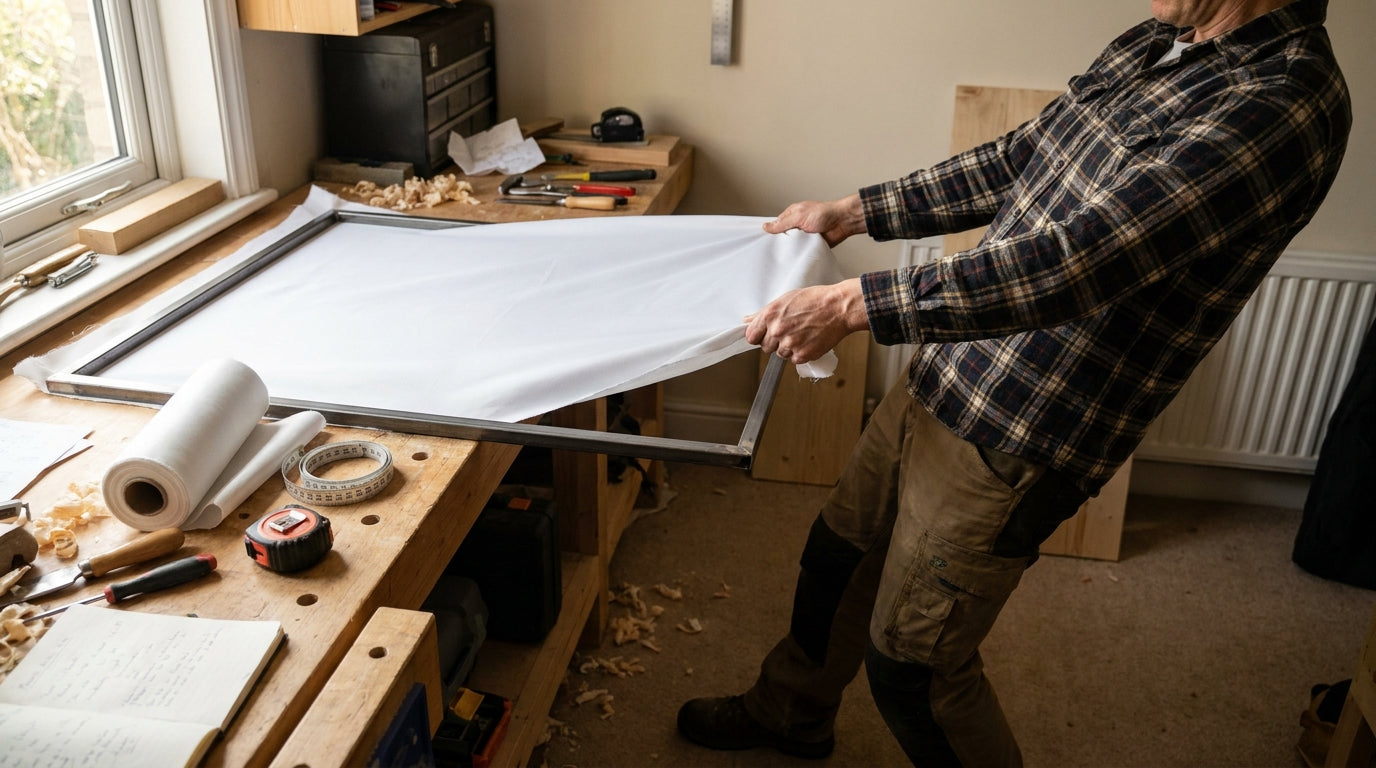
Here's the number that breaks the whole "just build it yourself" argument: a purpose-built golf impact screen from a real manufacturer starts at $179.95 (Source: Carl's Place). That's barely more than the ~$150 you'd spend on raw fabric for a DIY single-layer screen. So the question of DIY golf impact screen vs store bought isn't really about saving a fortune. It's about whether your homemade screen survives the season.
Spoiler: a lot of them don't. Builders chase the DIY route to shave a few bucks, then watch a hole punch through their bedsheet-grade fabric inside a few months. Let's look at where DIY actually wins, where it quietly fails, and what the data says about both.
Why DIY Golf Impact Screens Are So Tempting
The appeal is obvious. A full retail golf enclosure-and-screen package runs $2,500–$4,000, and assembling your own setup can save $1,000 or more (Source: Carl's Place / AboutGolf DIY guide). That's real money.
Ready to shop impact screens?
Browse the full Carl's Place lineup — every screen ships ready to mount with real size specs.
Shop Carl's Place Impact Screens →But here's the catch most builders miss: almost all of that savings comes from the enclosure — the frame, the padding, the side curtains. The screen fabric itself is the one component where cutting corners bites back fastest. A standard projector screen or a bedsheet pressed into impact-screen duty tears almost immediately under a real golf ball.
So you can absolutely DIY the frame. The fabric is where the math changes.
The Cost Gap Is Smaller Than You Think
People assume store-bought means premium pricing. It doesn't. Carl's Place screens are tiered: Standard from $179.95, Preferred from $298.95, and Premium triple-layer from $439.95 (Source: Carl's Place). Even the top-tier engineered screen lands under $450.
Meanwhile a budget single-layer DIY screen costs about $150 in fabric alone — before you account for grommets, tensioning hardware, and the inevitable do-over.
Golf Impact Screen Price by Type (Single Panel)
Source: Carl's Place pricing + Home Performance Lab DIY cost figures (2026)
Look at that spread. The DIY screen and the Standard store screen are practically neck-and-neck on price — but they are nowhere close on what you get.
What the Data Says About Durability and Safety
This is where the comparison stops being about dollars and starts being about your screen, your room, and your face.
First, lifespan. A budget single-layer DIY screen costing about $150 can develop visible holes within one season, while a multi-layer screen lasts five or more years under daily use (Source: Home Performance Lab — Best Golf Simulator Impact Screen, 2026). Replace a DIY screen every year and the "savings" evaporate by year two.
Second, impact rating. Purpose-built screens are tested to withstand golf balls traveling up to 250 mph — covering tour-level ball speeds (Source: Carl's Place / Home Performance Lab). DIY fabric rarely carries any impact rating at all, so you're guessing whether it survives your driver. If you want to understand why that number matters, our breakdown of the impact screen ball speed rating is worth a read.
Third — and most important — safety. On a properly tensioned screen, the ball should bounce back only 1 to 3 feet and drop near the golfer, not fly back at them (Source: Home Performance Lab — bounce-back safety analysis). DIY screens that are over- or under-tensioned create unpredictable, dangerous deflection. Getting that right is harder than it looks, which is exactly why we wrote a full impact screen tensioning system guide.
The Material Difference: 1.5mm vs 3mm
The reason store-bought screens behave so differently comes down to construction. Premium poly-spacer screen material is roughly 3mm thick — nearly twice the thickness of standard impact screens — using two polyester faces with vertical spacer yarns that absorb impact energy instead of returning it (Source: Home Performance Lab / Virtual-Golf-Simulator.com).
That sandwich construction is what quiets the bang, kills the bounce-back, and smooths out the image. A single-layer DIY fabric at ~1.5mm simply can't replicate it. You get a thinner sheet that returns more energy and shows more weave.
And weave is the enemy of a clean picture. Single-layer DIY screens are notorious for visible texture and double imaging — the same problem we dig into in our guide on impact screen ghosting and double image.
DIY vs Store-Bought: The Head-to-Head
Put the two side by side and the trade-offs get hard to ignore.
DIY vs. Store-Bought Golf Impact Screen Comparison
Swipe to compare →
| Attribute | DIY Single-Layer Screen | Store-Bought Multi-Layer Screen |
|---|---|---|
| Typical cost | ~$150 fabric only | $180–$440 finished panel |
| Material thickness | ~1.5mm single layer | ~3mm triple/poly-spacer |
| Ball speed rating | Untested / none | Up to 250 mph |
| Typical lifespan | Holes within ~1 season | 5+ years daily use |
| Ball bounce-back | Unpredictable (tension-dependent) | 1–3 ft, drops at golfer's feet |
| Ghosting / image quality | Visible weave & ghosting | Smooth 4K-capable surface |
So When Does DIY Actually Make Sense?
If you're building a frame and enclosure to save that $1,000, go for it. That's smart DIY — you're spending sweat on the stuff that doesn't take 200-mph hits.
Where DIY stops making sense is the screen surface itself. The fabric is the one part absorbing every strike, every day. Untested material with no impact rating, an unpredictable bounce-back, and a one-season lifespan isn't a bargain — it's a deposit on next year's replacement and a real safety gamble in between.
Serious builders tend to land in the same place: DIY the room, buy the screen.
The Bottom Line
The honest answer to DIY golf impact screen vs store bought is that the cost gap is mostly a myth once you factor in lifespan and safety. A $180 engineered screen that lasts five years beats a $150 sheet you re-buy every season — and it won't fire a ball back at your shins.
If you're ready to put a real, impact-rated surface in your bay, browse our golf impact screens collection and match the right tier to your swing speed and room. Build the frame yourself — just don't gamble on the fabric.
Planning the whole bay? Use Build Your Bay: pick your room size, screen and mat, and we match every part (enclosure, framing, back cover, hitting mat) and add it all to your cart in one click.


Not sure which simulator fits your room?
The two-minute Simulator Finder Quiz checks your space and budget against every system we carry.

Keep Reading
Related guides

golf simulatorGolf Simulator Hitting Mat Sizing Guide: Exact Dimensions for 10x12, 12x15, and 16x18 Rooms

golf simulatorGolf Simulator Enclosure Cost to Build: Every Line Item, DIY vs Pre-Made (2026 Numbers)

golf simulatorGolf Simulator Room Electrical Plan: Where Every Outlet Goes Before the Frame Closes Up