
golf simulator
Golf Impact Screen for a Two-Car Garage: How to Size, Center, and Hang One Across the Wide Bay
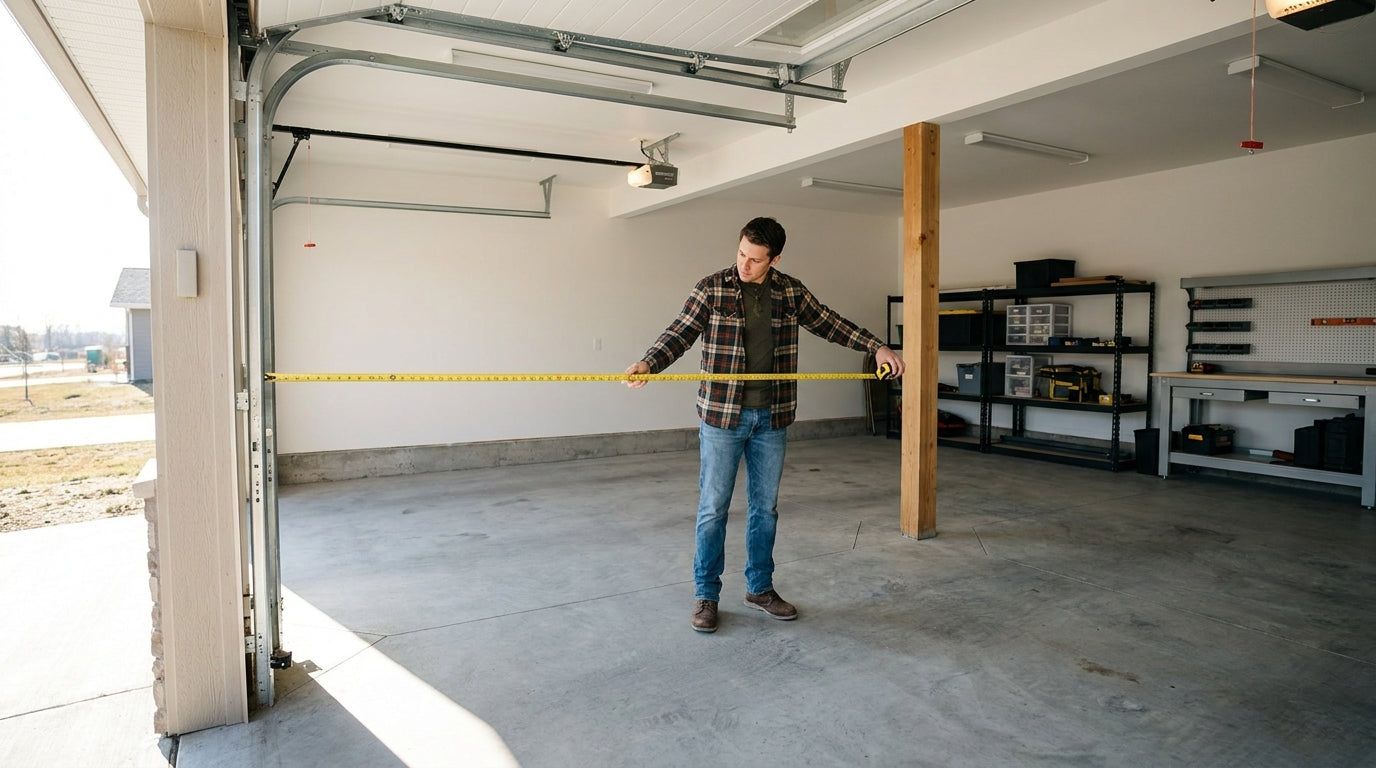
Here is the number that trips up almost every two-car garage build: the single most common two-car garage door width is 16 feet (Source: Supreme Garage Door / Amarr garage door sizing data). That sounds like plenty of room for a screen. It isn't. Between the door track, the jambs, and the support columns framing the bay, your usable center span shrinks fast — and if you span the wrong width, you either block your car or hang a sheet of polyester that sags like a hammock.
A two-car garage is the most common home-sim space there is. It's also the trickiest to size right, because the wide bay fights you in ways a narrow single-bay room never does. Let's fix that.
Why the Two-Car Bay Is a Different Animal
A narrow room gives you walls on both sides to tension against. A two-car garage gives you a big open mouth with a moving door in the middle of it. Everything about hanging a screen here is about the span — how wide you go, and how you keep that width flat.
A standard two-car garage interior is 20 ft wide at minimum, 22 ft for a comfortable fit, and 24 ft for two large vehicles (Source: Angi / Alan's Factory Outlet 2-Car Garage Dimensions guides). After you account for framing, projector throw, and side padding, that leaves you roughly a 10–12 ft usable center span. Not the full room. The middle slice of it.
That's the first mental shift: you're not filling the garage. You're centering a screen in the sweet spot of it.
The Widths That Actually Fit
Good news — screens are made for exactly this range. Retractable garage screens like the G-TRAK are telescopic and can be ordered anywhere between 8 and 14 feet to match a single- or double-bay door opening (Source: G-TRAK / Golf Sim Depot product specifications). That range brackets nearly every two-car bay on the planet, which means you can size to your door span instead of guessing.
Here's the rule I give everyone: if you plan to keep parking a car, match the screen to the door opening, not the room. A 16 ft door with a 12 ft screen centered between the columns clears the track and still gives you a massive hitting picture.
Available Impact Screen Widths vs. Common Two-Car Garage Door Openings
Source: G-TRAK screen sizing (8'–14') and Amarr / Supreme garage door width data
Matching Screen Width to Your Interior
Every garage is a little different, so pull the tape measure before you order anything. Measure the door opening between the jambs, then measure column-to-column where the screen will actually live. The smaller of those two numbers is your real ceiling.
Here's how the common sizes shake out:
Sizing an Impact Screen to Two-Car Garage Interior Width
Swipe to compare →
| Garage interior width | Recommended screen width | Side clearance / notes |
|---|---|---|
| 20 ft (minimum) | 10 ft screen | Tight; screen must clear support columns and door track |
| 22 ft (comfortable) | 10–12 ft screen | ~5 ft per side for framing, projector throw, and safety padding |
| 24 ft (large vehicles) | 12–14 ft screen | Room to center span and add a central back-wall brace against sag |
| 16 ft door opening | Match to opening, not room | Retractable 8'–14' screens size to the door track between columns |
Ready to size a screen to your bay?
Shop Impact Screens →What the Data Says About the Wide Span
Width isn't the only thing that changes when you go two-car wide. The screen takes more flex and more off-center hits across the bigger surface, so what it's made of starts to matter as much as how wide it is.
Internal impact testing found a tighter 200 TPI polyester weave lasts about 25% longer than a looser 150 TPI weave of the same material and thickness (Source: Canvas ETC, Golf Impact Screen Durability study). On a wide garage span that absorbs scattered strikes all over the panel, that density buys you real years.
Thickness helps too. Most golf impact screens run 1mm–3mm thick, with premium screens around 3mm — nearly twice a standard screen — trading a hair of image clarity for greater impact absorption (Source: Canvas ETC, Golf Impact Screen Materials Guide). That extra body resists the deeper sag and rebound that show up on a wider, less-supported surface.
And tension is non-negotiable. For wider rooms, installers recommend adding a central L-shaped brace to the back wall to prevent sag, because insufficient tension causes visible sagging, image distortion, and unpredictable ball rebound (Source: Canvas ETC / Big Horn Golfer install guides). Getting the tension dialed matters even more here than in a small room — our impact screen tensioning system guide walks through exactly how tight is tight enough.
Centering Over the Door Track
The garage door is the elephant in the room, and you have two honest choices. Hang the screen inside the bay behind the closed door, or hang it on a frame that lets you still open the door when you're not hitting. Either way, the screen has to center between the support columns, not the drywall edges.
Mark your true center first — measure the door opening, halve it, and drop a plumb line. Build the frame symmetric around that line so the picture sits dead-center and the span tensions evenly to both sides. If there's no clean wall to anchor to, joist mounting is your friend; the full method lives in our ceiling mount setup guide.
If keeping the car in the garage is the whole point, don't skip our breakdown of hanging a screen over a garage door without trapping your car inside — it's the exact problem the two-car bay creates.
Beat the Sag Before It Starts
A wide screen with weak tension is the number one complaint in garage builds. The fix is boring and it works: over-build the frame, tension across the studs evenly, and add that central back-wall brace on any span over about 12 feet. A flat screen gives you a sharp image and a predictable, safe bounce-back. A saggy one gives you distortion and golf balls with a mind of their own.
Measure twice. Match the screen to the door, not the room. Tension like you mean it. Do that and your two-car garage becomes the best sim room in the neighborhood.
Get the Right Screen for Your Bay
Whether you're spanning a tight 20-footer or a full 24-foot bay, the screen has to be sized, woven, and tensioned for the wide span — not borrowed from a single-bay spec sheet. Browse our full impact screen collection to find the width and weave that fits your two-car garage, and build it once.
Not sure which simulator fits your room?
The two-minute Simulator Finder Quiz checks your space and budget against every system we carry.


Keep Reading
Related guides

golf simulatorGolf Impact Screen Max Ball Speed Rating: What Your Screen Really Survives at 110+ MPH

corner setupGolf Simulator Impact Screen for a Corner Setup: How to Angle It Without Wrecking Your Bounce-Back

golf simulatorGolf Simulator Impact Screen for a Shed: How to Size, Hang, and Tension It Right