
golf simulator
Golf Impact Screen Max Ball Speed Rating: What Your Screen Really Survives at 110+ MPH
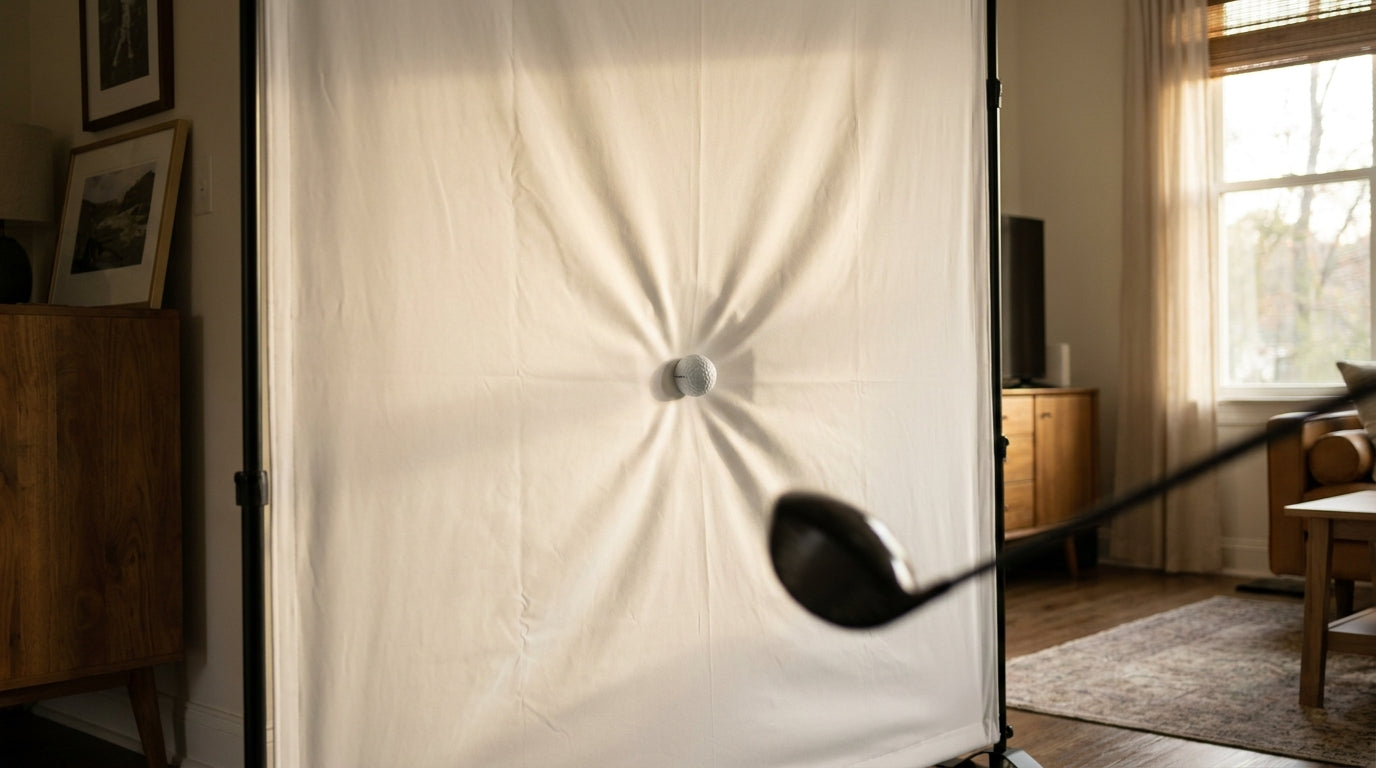
Here's the number that should stop you before you buy: every impact screen on the market — Carl's Place Standard, Preferred, Premium, plus SIGPRO and OptiShot — carries the exact same 250 MPH ball speed rating (Source: Carl's Place / GolfingSim). Same headline spec, wildly different prices. So if you swing hard and you're trying to figure out which screen won't blow out on you, that rating tells you almost nothing.
And it gets stranger. No human has ever produced a 250 MPH ball speed. The fastest PGA Tour drivers average roughly 175–180 MPH, and most amateurs land between 130–150 (Source: Carl's Place / GolfingSim). The rated ceiling is headroom, not a real failure point. Let's talk about what actually breaks a screen.
The 250 MPH Rating Is Marketing Headroom
A "max ball speed rating" sounds like a durability guarantee. It isn't. It's the manufacturer saying the fabric won't instantly rupture under a strike far beyond anything you'll ever hit. Since every tier shares the same number, it can't be the thing separating a screen that lasts a decade from one that frays in a year.
Think of it like the top speed printed on a car's speedometer. Reading 160 doesn't mean the engine will happily cruise there all day. Peak capability and long-term durability are two different questions.
What Actually Kills a Screen: Shot Count, Not Peak Speed
The real enemy is repetition. Entry-level single-layer screens typically show visible wear after 20,000–50,000 ball strikes, while a premium 3-layer screen like the SIGPRO Premier is rated for 200,000+ impacts (Source: GolfingSim). That's a 4–10x gap — and it has nothing to do with the ball speed rating they both advertise.
Every strike flexes the weave and tugs at the grommets. Cheap fabric fatigues faster. If you want the full breakdown of how tiers age, we dug into it in how long a golf impact screen lasts by tier.
Why Fast Swings Stress the Weave Differently
Here's where high swing speed matters — just not the way the spec sheet implies. A 110 MPH driver swing produces roughly 160 MPH ball speed under efficient impact (Source: UpYourClub / GolfingSim ball speed chart). That's well above the amateur average, and it means every drive dumps more energy into the same patch of fabric.
Faster balls don't just push the weave — they snap it, then load the grommets and seams with a harder yank on rebound. Construction is what absorbs that. Commercial multi-layer fabric (4.5mm poly-spacer) is engineered for ball speeds up to 200 MPH, while a 2mm single-layer screen only suits moderate swings (Source: Home Performance Lab / Green Pro Golf Simulators). Layer count and thickness are the real durability spec, not the shared 250 number.
What the Data Says
Put the numbers side by side and the picture is obvious: the money you spend buys weave density and layers, and those are exactly the traits that resist early failure for a hard swinger.
Impact Strikes Before Visible Wear, by Screen Tier
Source: GolfingSim lifespan data; premium/commercial figures per SIGPRO Premier rating and industry estimates
A quick recap of the stats that actually matter for a fast swinger:
- Every tier shares the same 250 MPH rating — so it's useless for comparison (Source: Carl's Place / GolfingSim).
- Entry screens wear at 20,000–50,000 strikes; premium 3-layer goes 200,000+ (Source: GolfingSim).
- Multi-layer 4.5mm fabric is built for up to 200 MPH ball speed; 2mm single-layer is for moderate swings only (Source: Home Performance Lab / Green Pro Golf Simulators).
Swing 110+ mph? Don't gamble on the cheapest weave.
Shop Impact Screens by Tier →Which Tier a 110+ MPH Swinger Actually Needs
The price step between tiers isn't a scam — it buys the weave density and layer count that resist fast-swing failure. Standard screens start around $180, a tighter-weave Preferred (8'×10.5') runs about $399, and 3-layer Premium sits higher still (Source: Carl's Place / retailer listings, Rain or Shine, Big Horn Golfer). Here's how they map to swing speed:
Impact Screen Tier Comparison for High-Speed Swingers
Swipe to compare →
| Tier | Construction | Best-fit swing / ball speed | Approx. price |
|---|---|---|---|
| Standard | Single-layer open-weave polyester | Moderate swings, under ~145 mph ball speed | ~$180 |
| Preferred | Tight-weave polyester + silicone reinforcement | Fast amateurs, up to ~160 mph ball speed | ~$399 (8'×10.5') |
| Premium | 3-layer tight-knit polyester | 110+ mph driver / 160+ mph ball speed | Higher than Preferred |
| Commercial multi-layer | 4.5mm poly-spacer, engineered to 200 mph | High-volume + high-speed use | Premium/commercial pricing |
If you're a 110+ mph driver, skip Standard. Your ~160 mph ball speed lands right where single-layer fabric starts fatiguing fast. Premium 3-layer is the sweet spot for most hard-swinging home builders, and commercial multi-layer only makes sense if you're also logging serious daily volume. Still torn between the specific tiers? Our full breakdown in Standard vs Preferred vs Premium walks through it, and if you're weighing one layer against two, single vs double layer covers the trade-offs.
The Bottom Line on Ball Speed Ratings
Stop shopping by the max ball speed number — every screen prints the same 250 and none of us will ever hit it. Shop by construction and strike lifespan, because those are what carry a fast swing for years instead of months.
A 110 mph swing is a gift. Don't waste it stretching a moderate-swing screen past its limits. Match the weave to your speed and you'll only buy once.
Ready to pick a screen that survives your driver?
Browse All Impact Screens →Not sure which simulator fits your room?
The two-minute Simulator Finder Quiz checks your space and budget against every system we carry.


Keep Reading


