
golf simulator
Golf Simulator Impact Screen Humidity & Mold Prevention: Keep Your Basement Screen Clean for Years
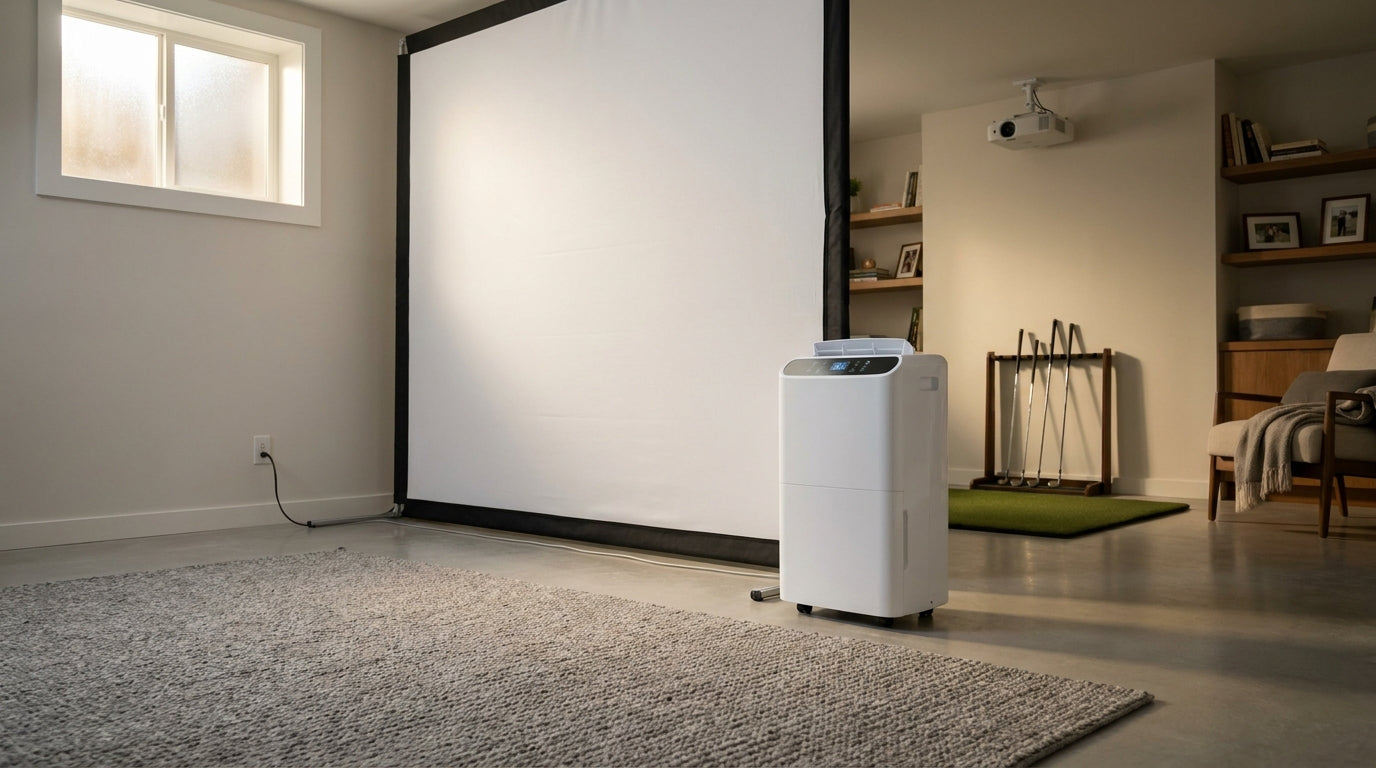
Here's the part nobody warns you about when you build a sim in the basement: the screen isn't usually what fails first — the room is. Mold can start colonizing fabric at just 55% relative humidity and absolutely thrives above 60% (Source: Family Handyman / Reliable Basement Waterproofing). That's not some tropical extreme. That's a normal, slightly-too-damp basement in July.
The good news? A quality polyester impact screen is far more resistant to moisture than the bedsheet-and-PVC contraptions people rig up. The better news is that keeping your golf simulator impact screen mold-free is mostly about controlling the air around it, not babying the fabric. Let's get into what actually matters.
Does Humidity Actually Damage an Impact Screen?
Short answer: not directly, and not quickly. Tightly woven polyester doesn't "rot" the way cotton or canvas does. Synthetic fibers don't feed mold on their own.
Building one now? Carl’s Place Preferred impact screen — from $299.
What mold actually eats is the stuff that lands on the screen — dust, skin cells, spilled drinks, and the fine film of grime that builds up over months. Add moisture and stagnant air, and that organic layer becomes a buffet. The fabric is just the plate.
So the threat isn't "humidity melts my screen." The threat is a damp room letting mildew take hold on whatever's sitting on the surface. That distinction changes everything about how you prevent it.
What the Data Says: The Humidity Numbers That Matter
If you remember one range from this whole post, make it this one. The EPA recommends keeping indoor relative humidity between 30% and 50% to prevent mold, and treats anything above 60% as a red flag that needs action within weeks (Source: U.S. Environmental Protection Agency).
The window is tighter than people think. Mold can begin growing at 55% RH and thrives past 60%, which is exactly why basements — naturally the dampest room in the house — should be held below 50% (Source: Family Handyman / Reliable Basement Waterproofing).
Timing matters just as much as the number. The EPA notes that if damp materials are dried within 24–48 hours, mold usually won't grow at all — but past that window, you should assume it already has (Source: U.S. EPA – A Brief Guide to Mold, Moisture and Your Home). A screen that gets sweaty and stays sweaty for three days is the real problem, not one that dries overnight.
Relative Humidity vs. Mold Risk for a Basement Screen Room
Source: EPA / Family Handyman basement humidity guidance
Why Polyester Beats DIY Fabric in Damp Rooms
This is where your screen choice quietly decides whether humidity is a non-issue or a recurring headache. A purpose-built polyester screen can absorb 15,000+ shots, and premium multilayer models are rated for 150,000+ strikes — while low-quality DIY fabric can give out after roughly 2,000 shots (Source: Golf Swing Systems / Canvas ETC).
Durability and moisture resistance go hand in hand here. Heavy-duty impact screens use tightly woven 600D to 900D polyester with a blackout or foam backing layer that resists moisture penetration far better than the open weave of a bedsheet or painter's drop cloth (Source: Canvas ETC – Golf Impact Screen Materials Guide).
That tight weave is the whole point. An open DIY weave has thousands of little pockets that trap humidity and dust — perfect mildew habitat. A dense polyester face with a sealed blackout back gives moisture nowhere to settle. If you want the deep dive on that backing layer, we broke it down in our guide on how a blackout layer kills light bleed.
Impact Screen Tiers: Construction, Price & Durability
Swipe to compare →
| Screen Type | Typical Price (USD) | Durability / Notes |
|---|---|---|
| DIY / improvised fabric | $20–$60 | ~2,000 shots; open weave traps moisture, mold-prone |
| Single-layer polyester | $150–$250 | 15,000+ shots; tight 600–900D weave resists moisture |
| Dual-layer polyester | ~$400 | Added noise damping and image contrast |
| Triple-layer + blackout/foam | ~$520 | 150,000+ strikes; blackout backing blocks light and resists mold |
The Room-Environment Playbook for Mold Prevention
Your screen choice sets the floor. The room sets the ceiling. Get these three things right and humidity basically stops being a factor.
1. Run a dehumidifier at ~40%
This is the single highest-leverage move. A dehumidifier set to roughly 40% keeps a basement in a "very safe" no-mold zone — and for best results the unit should sit centrally and away from walls for maximum airflow (Source: LearnMetrics / Lennox Basement Dehumidifying Guide). Pair it with a cheap hygrometer so you're managing an actual number, not a vibe.
2. Keep air moving
Stagnant air is mildew's best friend. Remember the EPA's 24–48 hour rule — a little circulation is often the difference between "dried out by morning" and "problem." A small oscillating fan, a cracked door, or an HVAC vent in the room all help the screen dry between sessions.
3. Leave the off-wall gap
That space behind the screen isn't just for ball safety and image quality — it's a ventilation channel. Pinning a screen flat against a cold, damp basement wall is asking for condensation and trapped moisture. We covered the ideal numbers in our breakdown of how much gap to leave from the wall, and it pays off for moisture too.
Simple Habits That Keep It Clean
None of this requires much effort once it's set up. Wipe the screen down periodically so there's no organic film for mold to feed on. Don't store wet towels or sweaty gear against it. And after a marathon session in a humid stretch, give the room a few hours of airflow before you close it up.
If you want a full routine, our guide on screen cleaning and maintenance walks through the exact cadence that extends screen life by 20–30%. Pair clean fabric with a controlled room, and a quality polyester screen will stay crisp for years — even in a basement.
The Bottom Line
Humidity won't dissolve your screen, but a damp, airless basement absolutely invites mold onto it. Hold the room under 50% (40% is the sweet spot), keep air circulating, leave the off-wall gap, and start with a tight-weave polyester screen instead of a DIY workaround. Do that, and golf simulator impact screen humidity and mold prevention becomes a set-it-and-forget-it part of your build.
Ready to start with fabric that's actually built to handle a basement? Browse our impact screen collection and pick the tier that fits your room — and your climate.


Not sure which simulator fits your room?
The two-minute Simulator Finder Quiz checks your space and budget against every system we carry.

Keep Reading
Related guides

golf simulatorGolf Simulator Enclosure Lighting Plan: Where to Mount Fixtures So They Never Wash Out Your Screen

golf simulatorGolf Simulator Basement Conversion Checklist: The 7 Steps to Run Before You Buy Anything

DIY golf simulatorGolf Simulator Garage Build Cost Breakdown: Every Line Item at Three Budget Tiers