
center seam durability
Golf Impact Screen Center Seam Durability: Is That Vertical Line a Weak Point?
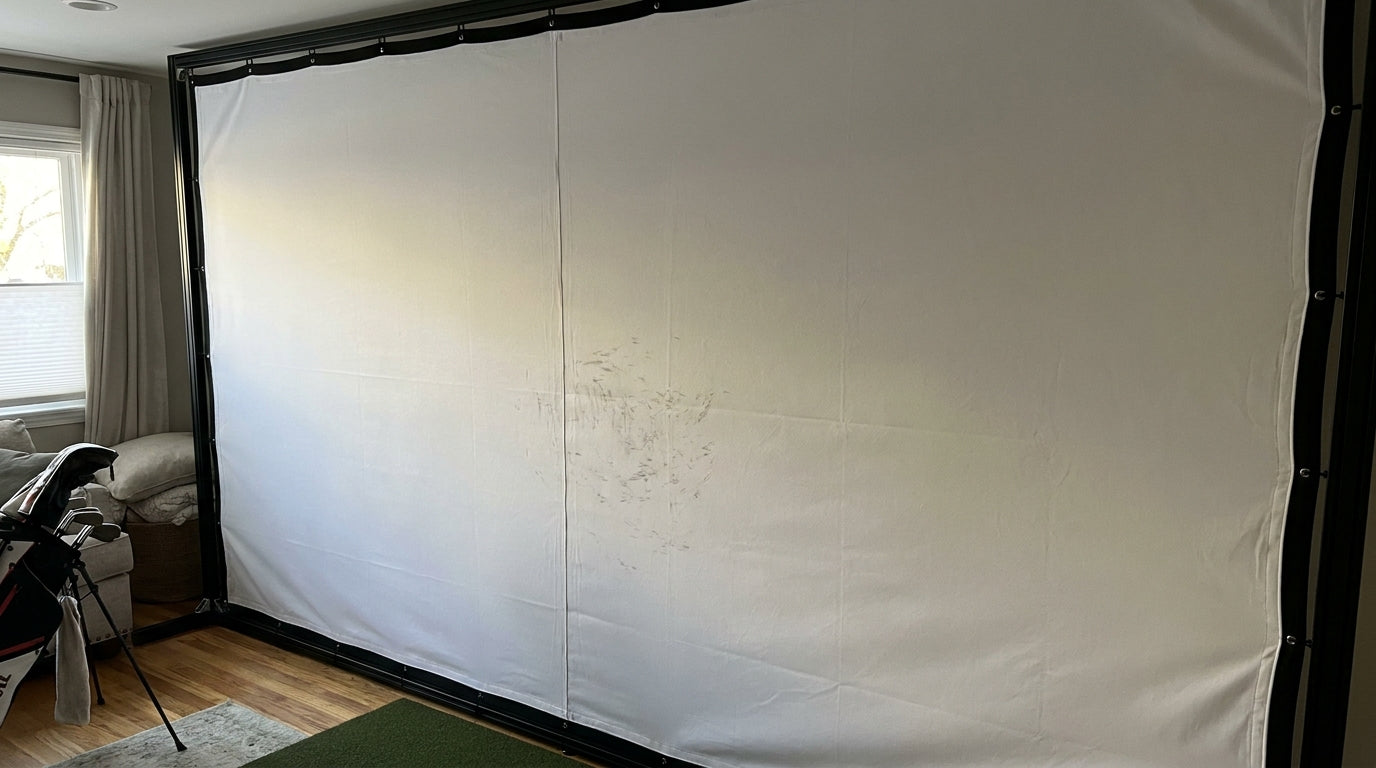
Here's the number that should reframe how you think about that vertical line down your screen: a premium multi-layer screen is rated to survive ball speeds up to 250 mph, while a budget single-layer screen taps out around 150 mph (Source: Shop Indoor Golf / Rain or Shine Golf product specs). The center strike zone eats the most repeated driver impacts of anywhere on the fabric. So the real question isn't whether a seam looks slightly visible — it's whether the construction underneath can take a decade of center-punched drives without giving out.
Let's get into how center seams actually work, whether they weaken, and when paying up for seamless is worth it.
Why Wide Screens Have a Center Seam at All
Impact screen fabric is woven on a loom, and looms only make material so wide. Par2Pro's seamless SQ-W material, for example, can only be produced seamless up to 127 inches — about 10.5 feet — in one direction (Source: Par2Pro / Big Horn Golfer impact screen guide). Go wider than that and physics forces a choice: stitch two panels together, or don't build the screen that wide.
Building one now? Carl’s Place Premium impact screen — from $440.
That's why the seam almost always lands dead center. Manufacturers split the width evenly and join the panels with a reinforced stitch. It's not a manufacturing shortcut — it's the only way to get a 12- or 14-foot screen out of fabric that can't be woven that wide in a single piece.
Does the Seam Actually Weaken Under Driver Impacts?
This is the fear, and it's a fair one. You're firing golf balls at the exact spot where two panels meet. But a well-built seam is not the failure point most people imagine.
On premium screens, durability comes from layering, not from a single sheet of fabric. Triple-layer screens like the Bullseye Premium — tested at 200 mph — sandwich a nylon spacer-yarn cushion between two poly-mesh layers (Source: Bullseye Golf Sims / Shop Indoor Golf product descriptions). That middle cushion absorbs energy across the whole center panel, so no single stitch line takes the full brunt of a strike. It's the same reason these screens resist visible ball marks that single-layer screens develop within weeks.
The seam only becomes a genuine weak point when two things go wrong: cheap stitching, and bad tension. A screen that sags or wrinkles concentrates stress right along the seam every time a ball hits. If you want the full picture on why the mount matters as much as the material, our tensioning system guide breaks down how to dial it in so the seam never carries load it wasn't built for.
What the Data Says
Durability tiers aren't marketing fluff — they line up with measurable specs and, tellingly, with how long manufacturers are willing to warranty the screen.
First, the ball-speed ratings. Budget poly blend screens are rated to roughly 150 mph, mid triple-layer screens to around 200 mph, and premium screens to 250 mph (Source: Manufacturer specs — Virtual Golf Simulator, Bullseye Golf Sims, Shop Indoor Golf, Rain or Shine Golf). Since the center seam zone absorbs the most repeated impacts, that rating is effectively a fatigue score for the part of the screen you hit most.
Second, warranty length is the tell. Coverage against rips and tears scales cleanly with tier: a Virtual Golf poly blend gets 3 months, SIG Preferred 6 months, SIG™ Premium a full year, and Elite Screens ImpactWhite® stretches to 2 years — 3 years for their ENR-G material (Source: Manufacturer warranty terms). Manufacturers don't warranty a seam for two years unless they've tested it holding up.
Third, price reflects the jump. SIGPRO Premium panels run from $460 for a 7'7" square up to $1,060 for a 10' × 17'6" wide screen, while an entry GoSports 10' × 7.5' sells around $150 (Source: Shop Indoor Golf / Big Horn Golfer 2024 pricing). The premium you pay on wide screens is buying the layered construction that keeps the seam honest.
Rated Ball-Speed Durability by Screen Tier
Source: Manufacturer specs — Virtual Golf Simulator, Bullseye Golf Sims, Shop Indoor Golf, Rain or Shine Golf
How Visible Is the Seam on the Projected Image?
Durability aside, the other worry is the picture. Nobody wants a line splitting their fairway in half.
The good news: on a properly tensioned premium screen, the seam is a non-issue for image quality. Triple-layer poly-spacer screens display a crisp 4K image with zero visible grain at normal viewing distances, and a well-tensioned panel avoids the distortion a wrinkled or loose screen creates (Source: Home Performance Lab / Spectrum Golf 2026 impact screen guide). A visible seam is usually a symptom of poor tension or a coarse weave — not the stitch itself.
If you're pairing a sharp projector with your screen, the weave quality matters more than the seam. Our breakdown of whether your screen actually resolves 4K detail covers why the fabric — seamed or not — is what limits real image clarity.
Seamless vs Seamed: When Is It Worth Paying Up?
Here's the honest answer: if your build is 10.5 feet wide or narrower, you can get a true seamless single panel, and it's the cleaner choice — no seam to think about at all. Past that width, a seam is simply part of the deal, and a good seamed premium screen will outlast a cheap one by years.
Where seamless (or motorized) screens command a real premium — often $1,100 to $3,499 and up — is in the very widest and most feature-rich builds. For most home bays, a well-tensioned triple-layer seamed screen hits the sweet spot on durability, image, and price. If your current screen is already showing wear, our guide on which material tier survives your swing will help you match the upgrade to how hard you actually hit it.
Golf Impact Screen Tiers: Price, Durability & Warranty
Swipe to compare →
| Screen Tier | Typical Price Range | Rated Ball Speed | Warranty (rips/tears) |
|---|---|---|---|
| Budget single-layer (GoSports / Poly Blend) | $150 – $300 | ~150 mph | 3 months |
| Mid single-layer (SIG Preferred) | $300 – $500 | ~180–200 mph | 6 months |
| Premium triple-layer (SIG™ Premium / Bullseye) | $460 – $1,060 | up to 250 mph | 1 year |
| Premium seamless / motorized (Elite Screens, SportScreen Vanish) | $1,100 – $3,499+ | up to 250 mph | 2–3 years |
The Bottom Line on Center Seams
A center seam on a wide screen isn't a defect and it isn't a ticking time bomb. On a quality triple-layer screen with proper tension, the seam holds up to repeated driver strikes just fine and disappears into the image at normal viewing distance. The screens that fail at the seam are the cheap, thin, poorly-tensioned ones — and those fail everywhere else too.
Buy for construction and tension, not for the presence or absence of a line. Ready to upgrade to a screen built to take center-punched drives for years? Browse our impact screens collection and match the tier to how hard you swing.


Not sure which simulator fits your room?
The two-minute Simulator Finder Quiz checks your space and budget against every system we carry.

Keep Reading
Related guides

golf simulatorGolf Simulator Enclosure Lighting Plan: Where to Mount Fixtures So They Never Wash Out Your Screen

golf simulatorGolf Simulator Basement Conversion Checklist: The 7 Steps to Run Before You Buy Anything

DIY golf simulatorGolf Simulator Garage Build Cost Breakdown: Every Line Item at Three Budget Tiers