
golf simulator
How Long Does a Golf Impact Screen Last? Real Lifespan Numbers by Screen Tier
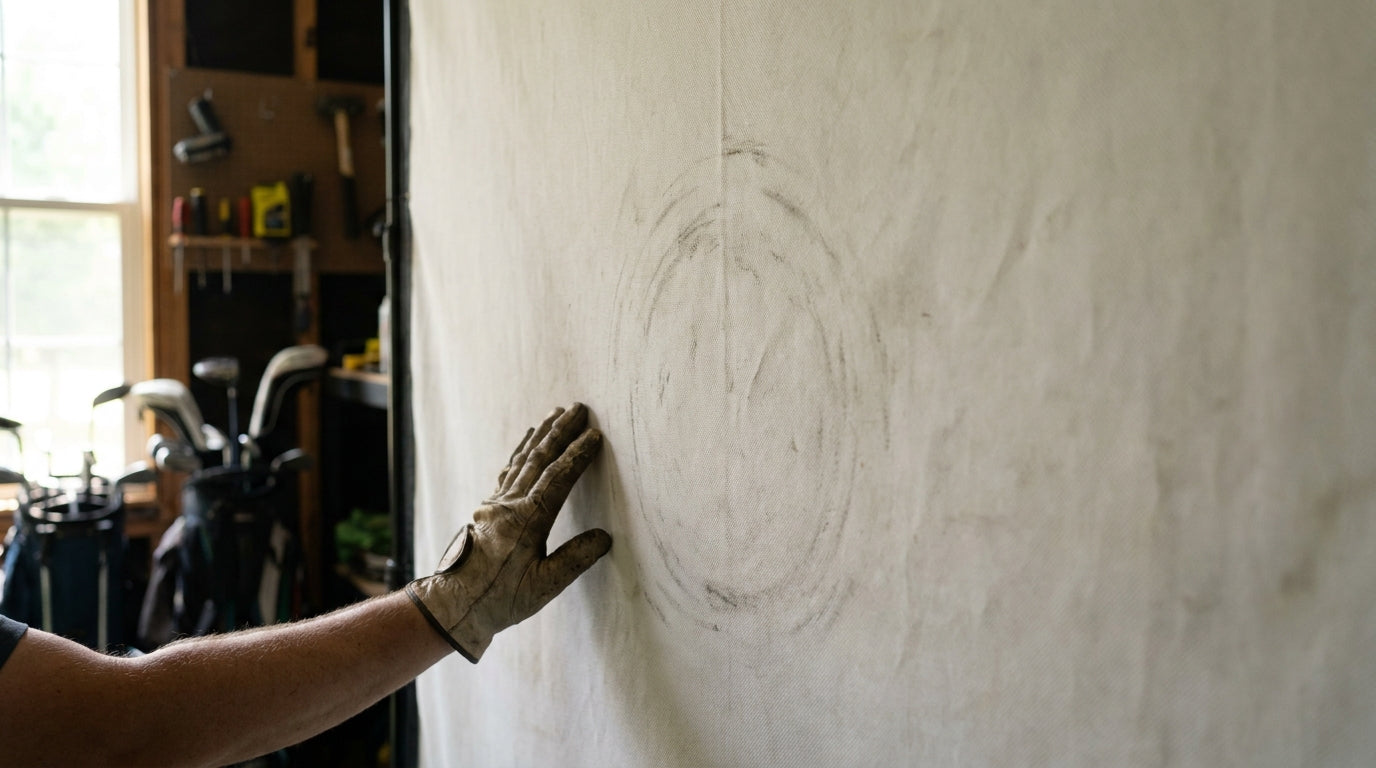
Here's a number that should stop you before you buy the cheapest screen you can find: a bargain single-layer impact screen can start showing wear after roughly 2,000 shots, while a high-quality screen shrugs off 15,000+ without blinking (Source: Canvas ETC, 'Golf Impact Screen Durability'). That's a nearly 8x durability gap between two products that look almost identical hanging on a wall.
So when someone asks how long a golf impact screen lasts, the honest answer is: it depends entirely on what you bought and how hard you swing. The good news is that lifespan is measurable — in ball strikes and in calendar years — and once you see the numbers, the "cheap" option usually stops looking cheap.
Let's break down the real lifespan expectations, what actually wears a screen out, and how to get the lowest cost per shot over the long haul.
So How Long Does a Golf Impact Screen Last, Really?
In real-world terms, a quality impact screen under normal home use lasts about 2 to 5 years. Push it into heavy or commercial use and that drops to somewhere between six months and a year (Source: Canvas ETC & RSGolf Optishot impact screen guides).
The variable that swings that range the most is volume. If you're hammering 1,500-plus balls a week into a budget screen, it can wear out in under three months. Hit a couple of small buckets on weekends into a good screen, and you might not think about replacement for half a decade.
Material tier is the other half of the equation. Entry-level screens are typically rated for 20,000 to 50,000 strikes, while a premium 3-layer poly-spacer screen — the kind used in Carl's Premium and SIGPRO Premier fabrics — is rated for 200,000+ ball impacts (Source: Home Performance Lab / ShopIndoorGolf SIGPRO). That's a 4x to 10x jump in usable shot life just from construction.
Estimated Impact Screen Lifespan by Screen Tier (ball strikes before visible wear)
Source: Compiled from Canvas ETC, Home Performance Lab, and SIGPRO/Carl's Place ratings (entry-level midpoint of 20k–50k range; mid-tier is an industry estimate)
What the Data Says
Put the numbers side by side and the durability story gets sharp:
- Quality screens handle 15,000+ shots; budget screens show wear near 2,000 — an 8x gap (Source: Canvas ETC, 'Golf Impact Screen Durability').
- Premium 3-layer poly-spacer fabric is rated for 200,000+ impacts versus 20,000–50,000 for entry-level screens (Source: Home Performance Lab / ShopIndoorGolf).
- Weave matters as much as thickness: a tighter 200 TPI polyester weave lasted 25% longer than a looser 150 TPI weave of the same material (Source: Canvas ETC internal impact-simulation studies).
- Commercial multi-layer fabric (4.5mm poly-spacer) is engineered for ball speeds up to 200 mph, while a 2mm single layer only suits moderate swings (Source: Canvas ETC 'Best Golf Impact Screen' & Materials Guide).
Want a screen that measures its life in years, not months?
Shop Durable Impact Screens →What Actually Wears Your Screen Out
Screens don't die of old age — they die from four specific stresses. Knowing them tells you where your money actually goes.
Swing speed and ball speed
Every strike dumps energy into the fabric. A single-layer 2mm screen absorbs moderate swings fine, but a driver at 150+ mph ball speed pounds the same fibers over and over. Multi-layer poly-spacer screens spread that impact across layers, which is why they're rated up to 200 mph (Source: Canvas ETC Materials Guide).
Ball type
Hard range balls and worn foam are surprisingly rough on fabric. The ball you feed your screen changes its lifespan more than most people expect — we broke that down in our guide to the best golf balls for impact screen longevity.
Tension and weave density
A screen hung too tight can't absorb energy and concentrates stress at the seams; too loose and it slaps around. And weave density is a real lever — that 200 TPI weave outlasting a 150 TPI one by 25% is the same material, just tighter.
Lifespan by Tier: Construction vs. Durability vs. Value
Golf Impact Screen Tiers: Construction vs. Durability vs. Long-Term Value
Swipe to compare →
| Screen Tier | Construction / Thickness | Rated Ball Speed | Est. Lifespan (shots / years) | Typical Price (industry estimate) |
|---|---|---|---|---|
| Budget single-layer | 1 layer polyester, ~2mm | Up to ~120 mph | ~2,000–20,000 shots / under 1 yr heavy use | $100–$200 |
| Entry-level | Single-layer heavy polyester | ~150 mph | 20,000–50,000 shots / 1–2 yrs | $200–$400 |
| Mid-tier reinforced | Heavy polyester + silicone, tighter weave | ~150+ mph | ~100,000 shots / 2–4 yrs | $400–$700 |
| Premium 3-layer poly-spacer | 3-layer / 4.5mm poly-spacer | Up to 200 mph | 200,000+ shots / 5+ yrs | $700–$1,200 |
If you want a deeper walkthrough of how tiers differ within one brand's lineup, our Carl's Place Standard vs Preferred vs Premium breakdown maps this exact trade-off to specific products.
The Cost-Per-Shot Math That Actually Matters
Here's where the cheap screen bites you. A $150 budget single-layer that develops holes within one season doesn't save money versus a multi-layer screen that lasts 5+ years under daily use (Source: Home Performance Lab, 'Best Golf Simulator Impact Screen 2026').
Run the math. Buy the $150 screen twice a year and you've spent $300 annually — and you're re-hanging fabric every few months. A premium screen rated for 200,000+ shots amortizes to a fraction of a cent per swing over its life.
Cost per shot, not sticker price, is the number serious sim builders actually care about. And when the day does come to replace one, our guide on how to know when it's time to upgrade will help you spot the warning signs before a ball punches through.
How to Get Every Shot Out of Your Screen
Whatever tier you land on, a few habits stretch its life: hang it at the right tension, feed it clean quality balls, and keep it free of grime that grinds at the fibers. Good maintenance alone can add 20–30% to a screen's usable life.
Buy for the swings you'll actually take. A weekend hitter can be perfectly happy in the mid-tier. If you're grinding daily or running a busy garage bay, the premium poly-spacer isn't a luxury — it's the cheaper option over five years.
Ready to buy a screen you won't be replacing next season? Browse our full lineup of durable impact screens and match the tier to how hard you swing.
Not sure which simulator fits your room?
The two-minute Simulator Finder Quiz checks your space and budget against every system we carry.


Keep Reading


